
Abrasives play a foundational role in welding and metal fabrication. Every cut, grind, and surface finish directly affects part accuracy, weld integrity, and the durability of the final product. That’s why an appropriate abrasive choice is fundamentally important.
With countless grinding wheels, cutting discs, and finishing abrasives available, selecting the right product can feel overwhelming. Each abrasive is engineered for a specific purpose, material type, and performance requirement. Understanding how these products work—and how they fit into your workflow—makes the selection process straightforward, allowing you to make informed purchasing decisions rather than relying on trial and error.
This buyer’s guide from C&O Distributors is designed to help you understand abrasives used throughout metalworking applications, including grinding, cutting, and finishing. You’ll learn how abrasive materials differ, how grit size impacts performance, and how to match abrasives to real-world fabrication tasks. The goal is to help you improve productivity while maintaining consistent, professional results.
Understanding Abrasives: Materials, Bonding, and Grit Selection
To choose the right abrasive, you first need to understand how abrasives are constructed and how they remove material. Abrasives function by using hard mineral grains to cut or wear away metal through friction. These grains are held together with bonding agents and formed into wheels, discs, belts, or pads depending on the application.
Common Abrasive Grain Types
Different abrasive grains are engineered for different materials and workloads. The most widely used options and their general applications include:
- Aluminum Oxide
Used for general grinding on carbon steel and other ferrous metals because it balances durability and cost.
- Zirconia Alumina & Ceramic Alumina
Designed for aggressive stock removal and high-pressure applications, making them ideal for production grinding.
- Silicon Carbide
Sharper but more brittle, which makes it suitable for non-ferrous metals, stainless steel, and specialty materials.
Bonding Systems and Performance
Bonding agents determine how quickly an abrasive wears and how consistently it cuts. Resin-bonded abrasives provide flexibility and shock resistance, while vitrified bonds offer rigidity and precision. The bond type affects heat resistance, grain exposure, and overall tool life.
Understanding Grit Size
Grit size plays a major role in surface finish and material removal rate. Coarse grits remove material quickly but leave deeper scratches, while finer grits are used for blending and finishing. Using proper grit progression allows you to move efficiently from rough shaping to surface refinement without unnecessary rework.
Grinding Abrasives: Power, Control, and Stock Removal
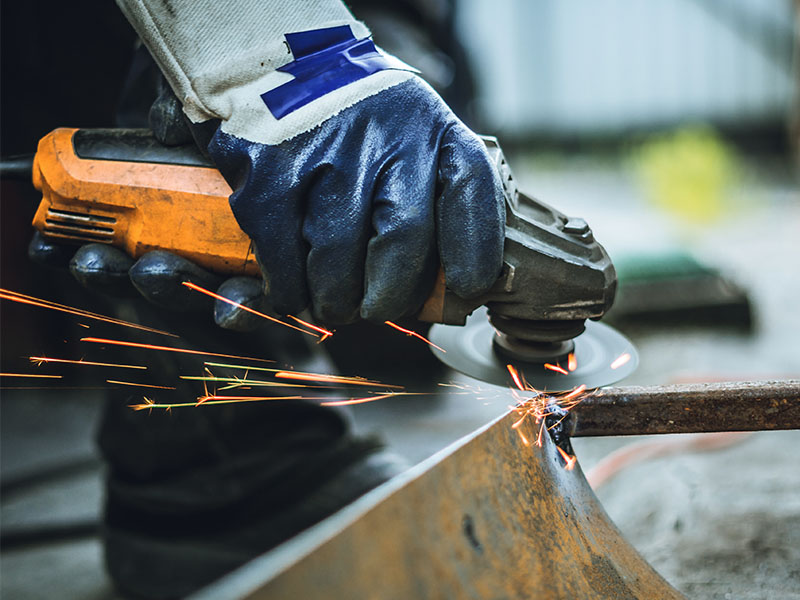
Grinding abrasives are designed for aggressive material removal, weld cleanup, edge shaping, and surface leveling. When excess weld metal or uneven surfaces need to be removed, grinding wheels and grinding discs become essential tools in your workflow.
Types of Grinding Wheels
Depressed center grinding wheels are widely used in metal fabrication because they allow for better control and access to angled surfaces. These wheels enable flush grinding while improving stability and reducing operator fatigue. Wheel thickness and hardness also impact performance. A wheel that is too hard may glaze over and lose cutting efficiency, while a wheel that is too soft may wear down prematurely.
Matching the Wheel to the Equipment
Grinding performance and safety depend on equipment compatibility. Angle grinders, bench grinders, and stationary grinding machines all operate at specific speeds. Using a grinding wheel that exceeds the tool’s RPM rating increases the risk of wheel failure and injury. Always confirm size, arbor fit, and speed rating before use.
Why Proper Grinding Matters
Effective grinding improves downstream operations. When surfaces are properly prepared, cutting becomes more accurate, welding quality improves, and finishing requires less effort. Selecting the correct grinding abrasive reduces heat buildup, improves control, and supports consistent results across jobs.
Cutting Abrasives: Precision, Speed, and Clean Edges
Cutting abrasives are engineered for speed and accuracy. Unlike grinding wheels, cut-off wheels are thin and designed to slice through metal rather than grind it away. This thin profile minimizes material loss and produces cleaner, straighter cuts.
Material-Specific Cutting Discs
Not all cutting discs perform the same across materials. Using a wheel designed for carbon steel on stainless steel, for example, can cause contamination and corrosion. Stainless steel cut-off wheels are manufactured without iron, sulfur, or chlorine to protect material integrity and surface quality.
Common Cutting Applications
Cut-off wheels are frequently used for cutting tubing, pipe, plate steel, and structural components. High-quality cutting abrasives maintain a sharp edge throughout the cut, reducing the need for excessive force and improving accuracy.
Proper Cutting Technique
Allowing the abrasive to do the work is essential. Applying side pressure or forcing the wheel through material leads to premature wear or disc failure. When used correctly, cutting abrasives deliver clean edges that require minimal secondary finishing, improving efficiency and safety.
Finishing Abrasives: Surface Quality and Professional Results
Finishing abrasives are where craftsmanship becomes visible. These products are used to blend welds, smooth edges, remove light imperfections, and prepare surfaces for coating or painting. The right finishing abrasive allows you to achieve a consistent appearance without damaging the base material.
Flap Discs and Blending Tools
Flap discs combine grinding and sanding into a single tool, making them ideal for weld blending and contouring. Their layered abrasive flaps provide controlled material removal and a smoother finish than traditional grinding wheels.
Sanding and Surface Conditioning
Sanding discs and fiber discs are used when additional surface refinement is required. Available in multiple grit sizes, these abrasives help control surface texture and prepare parts for final finishing. Non-woven surface conditioning pads are especially useful for light deburring, oxidation removal, and uniform surface preparation on stainless steel and aluminum.
Why Finishing Abrasives Matter
Proper finishing reduces secondary operations and improves visual consistency. Clean, uniform surfaces also improve weld quality, coating adhesion, and long-term durability, making finishing abrasives a critical step in fabrication workflows.
How to Choose the Right Abrasive for Your Application
Selecting the right abrasive requires evaluating several variables at once. Material type is the first consideration, as ferrous metals, stainless steel, aluminum, and specialty alloys all respond differently to abrasive grains.
Key Selection Factors to Consider
When choosing abrasives, you should evaluate:
- The material being worked on
- The type of operation required
- Equipment compatibility and speed ratings
- Desired surface finish and efficiency goals
Using an abrasive that is too aggressive for light finishing can damage parts, while underpowered abrasives slow production and increase labor costs. Equipment compatibility should never be overlooked, as safety and performance are directly connected.
Evaluating Long-Term Value
Higher-performance abrasives may cost more upfront but often last longer and work faster. When downtime, replacement frequency, and labor savings are considered, investing in the right abrasive delivers measurable long-term value.
Get Help With Abrasive Selection From C&O Distributors
Abrasives influence every stage of metal fabrication, from initial cutting to final surface preparation. When abrasives are selected based on material, application, and performance requirements, your entire workflow benefits.
C&O Distributors is a trusted partner for welding supplies and metal fabrication tools. With a strong understanding of abrasive applications and real-world fabrication challenges, we help you identify solutions that support productivity and craftsmanship at every stage.
If you’re ready to improve your abrasive selection and streamline your fabrication process, contact C&O Distributors today. Our knowledgeable team can help you choose the right abrasives for your applications and keep your projects moving forward with confidence.
