

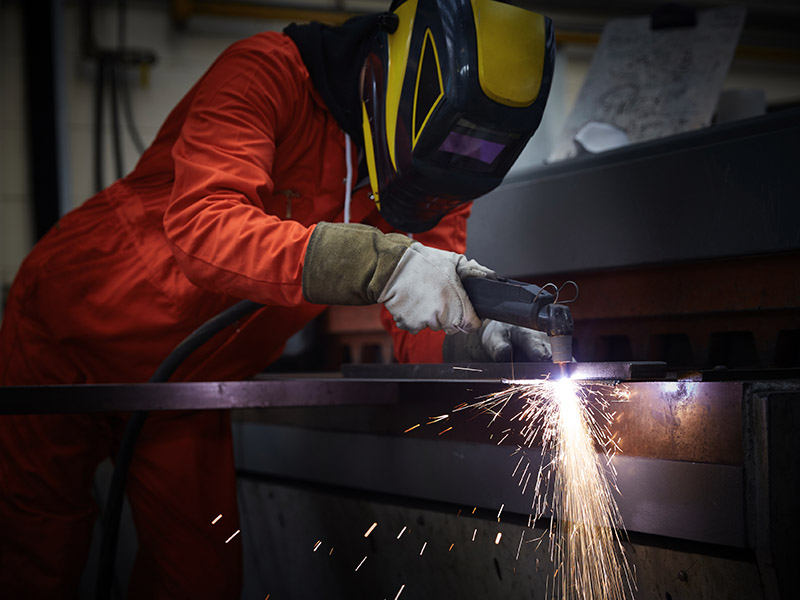
If you’re comparing plasma cutting vs. oxy-fuel cutting for your next metal fabrication project, you are likely evaluating which system best fits your materials, thickness requirements, and long-term goals. Both processes are widely used across the welding and fabrication industry, yet each serves a different purpose depending on your application.
The wrong system can slow production, increase consumable costs, or create additional finishing work. C&O Distributors works closely with fabricators, welders, and homeowners who rely on dependable welding supplies and cutting equipment to keep projects moving.
In this guide, we’ll discuss how plasma cutting and oxy-fuel cutting work, where each method excels, and how to determine which solution fits your needs best.
What Is Plasma Cutting and How Does It Work?
Plasma cutting is a thermal cutting process that uses an electrically conductive gas to create a high-temperature plasma arc. When you activate the plasma torch, an electrical arc passes through compressed gas such as air, nitrogen, or argon. This interaction transforms the gas into plasma, which reaches temperatures hot enough to melt metal instantly. The high-velocity stream then blows molten material away, producing a narrow, clean cut.
One of the primary advantages you gain with plasma cutting is versatility. Because the process does not rely on oxidation, you can cut mild steel, stainless steel, aluminum, and other conductive metals.
Plasma cutting also delivers faster cutting speeds, particularly on thin to medium-thickness materials. If you frequently cut sheet metal or plate under one inch thick, plasma significantly improves throughput. Faster cuts mean shorter production cycles and increased job capacity.
Modern plasma systems often integrate with CNC tables, allowing you to automate precision cuts. If your projects involve repeatable components or intricate designs, CNC plasma cutting enhances accuracy while reducing material waste. However, you must ensure proper electrical supply and compressed air capacity before installation.
Advantages of Plasma Cutting
- Cuts stainless steel, aluminum, and mild steel
- Faster cutting speeds on thin and medium materials
- Narrow kerf width with minimal distortion
- Cleaner edges requiring less grinding
- Compatible with CNC automation
Limitations of Plasma Cutting
- Higher upfront equipment cost
- Requires electricity and compressed air
- Consumable parts need periodic replacement
When speed, precision, and multi-metal capability matter most, plasma cutting offers a powerful solution.
What Is Oxy-Fuel Cutting and How Does It Work?
Oxy-fuel cutting, commonly referred to as oxy-acetylene cutting, remains one of the most established metal cutting methods in fabrication. The process combines a fuel gas with oxygen to preheat carbon steel to its ignition temperature. Once heated, a concentrated stream of pure oxygen reacts with the metal, causing rapid oxidation that effectively burns through the steel.
Because oxy-fuel relies on oxidation, it’s limited to carbon steel and low-alloy steel. Stainless steel and aluminum cannot be cut using this method since they do not oxidize in the same way. If your work primarily involves structural carbon steel, however, oxy-fuel remains a dependable and cost-effective choice.
One significant advantage you gain with oxy-fuel cutting is portability. The system does not require electricity, making it ideal for fieldwork, demolition projects, and remote construction sites. With properly stored cylinders and maintained equipment, you can operate in environments where power access is limited.
Oxy-fuel also performs exceptionally well on thick steel plates. If you routinely cut materials exceeding two inches in thickness, oxy-fuel often proves practical and economical. While slower on thin materials compared to plasma, it remains a trusted option in heavy industrial applications.
Advantages of Oxy-Fuel Cutting
- Lower initial equipment investment
- No electricity required
- Highly effective on thick carbon steel
- Portable and suitable for field applications
Limitations of Oxy-Fuel Cutting
- Limited to carbon steel
- Slower on thin materials
- Larger heat-affected zone
- May require more finishing work
For structural steel fabrication and outdoor work, oxy-fuel cutting should be your go-to option.
How to Decide: 5 Questions to Ask Before Choosing a Cutting System
If you are still weighing plasma cutting vs. oxy-fuel cutting, asking targeted questions simplifies the decision.
1. What materials do you cut most often?
Stainless steel and aluminum require plasma. Carbon steel allows for either method.
2. What thickness range defines your projects?
Thin to medium metals favor plasma speed. Extremely thick steel favors oxy-fuel.
3. Do you need portability?
Remote job sites without reliable power support oxy-fuel systems.
4. Is speed or budget your priority?
Plasma improves productivity. Oxy-fuel reduces upfront costs.
5. Do you plan to scale production?
Automation and CNC integration often favor plasma cutting systems.
Exploring Plasma Cutting vs. Oxy-Fuel Cutting
Speed and Productivity
When evaluating plasma cutting vs. oxy-fuel cutting, productivity often becomes the deciding factor. Your cutting speed directly influences labor costs, project timelines, and overall profitability.
Plasma cutting significantly outperforms oxy-fuel on thin and medium-thickness metals. If you cut 1/4-inch or 1/2-inch mild steel regularly, plasma allows you to move quickly from pierce to finish. Reduced cutting time increases output per shift, helping you complete more jobs without adding labor hours.
Oxy-fuel cutting requires preheating before the oxygen stream engages the metal. This additional step slows the process, particularly on thinner materials. However, as steel thickness increases, the speed gap narrows. In extremely thick carbon steel applications, oxy-fuel remains competitive and sometimes more practical.
Automation further enhances plasma productivity. CNC plasma systems provide consistent, repeatable results and reduce manual adjustments.
For heavy-duty carbon steel cutting where speed is less critical, oxy-fuel may still meet your operational needs effectively.
Cut Quality, Precision, and Heat-Affected Zone
The quality of your cut influences every downstream process, including welding, assembly, and finishing. Cleaner cuts reduce rework and improve overall efficiency.
Plasma cutting produces a narrow kerf and a smaller heat-affected zone (HAZ). Reduced heat transfer minimizes distortion, particularly on thin materials. If you fabricate custom brackets, panels, or precision components, plasma cutting helps maintain dimensional accuracy.
Cleaner edges often require little to no grinding before welding. This efficiency saves time and reduces labor costs. When precision and appearance matter, plasma cutting supports higher-quality outcomes.
Oxy-fuel cutting generates a wider kerf and larger heat-affected zone due to extended heating. Thin materials may experience warping, and additional finishing may be required. However, for thick structural steel, the edge quality is often sufficient for fabrication purposes.
If your work involves detailed cuts or thin materials, plasma provides superior edge quality. For heavy structural components, oxy-fuel still delivers reliable performance with manageable finishing requirements.
Equipment Costs and Long-Term Operating Expenses
Understanding the total cost of ownership helps you make a smart investment. Equipment price, consumables, maintenance, and utilities all contribute to long-term expenses.
Oxy-fuel systems typically require a lower initial investment. Torches, regulators, hoses, and cylinders are relatively affordable and easy to source. If you are starting a fabrication business or adding basic cutting capabilities, oxy-fuel may offer an accessible entry point.
However, ongoing costs include oxygen and fuel gas refills. Further, routine maintenance of hoses and torch components is non-negotiable to ensure safe operation.
Plasma cutting systems often require higher upfront costs, especially when paired with CNC automation. You must also consider electrical infrastructure and compressed air systems. Further, plasma consumables such as electrodes and nozzles need regular replacement.
Despite higher initial investment, plasma may reduce labor costs through faster cutting speeds and minimal finishing. Evaluating your production volume helps determine which option provides better long-term value.
Making the Right Investment in Metal Cutting Equipment
By now, you have a clearer understanding of how plasma cutting and oxy-fuel cutting differ in performance, cost, precision, and ideal applications. The decision of which to use for your next project is about which method aligns with your materials, workload, jobsite conditions, and long-term growth plans.
Just as important as choosing the right cutting method is choosing the right supplier. You need access to reliable equipment, quality consumables, and knowledgeable support when questions arise. That’s where we come in. C&O Distributors proudly provides dependable welding supplies, plasma cutting systems, oxy-fuel equipment, and expert guidance.
Our team is ready to help you evaluate options, compare systems, and select the right solution for your operation. Contact us today and discover why so many fabricators, welders, and homeowners across Maryland rely on us as their go-to welding supply partner.
