
Choosing between MIG, TIG, and stick welding can be confusing when each process offers different advantages. The right option depends on what you’re welding, where you’re working, how much experience you have, and the type of finish you want.
Understanding how each welding method works can help you avoid weak welds, unnecessary equipment costs, and frustrating project delays. The sections below break down the strengths, limitations, and best uses of MIG, TIG, and stick welding so you can choose the process that fits your project.
How MIG Welding Works
MIG welding, also known as gas metal arc welding, uses a continuously fed wire electrode to join metal. When you pull the trigger on the welding gun, the machine feeds wire into the joint while shielding gas protects the molten weld pool from contamination.
Because the wire feeds automatically, you can focus on maintaining the correct gun angle, travel speed, and distance from the workpiece. That makes MIG welding one of the easiest welding processes for beginners to learn.
MIG welding works especially well on mild steel, stainless steel, and aluminum when you use the correct wire, shielding gas, and machine settings. You can use it for projects such as repairing a lawn mower deck, building a workbench, assembling metal shelving, fabricating a garden gate, or fixing a utility trailer.
Speed is one of MIG welding’s biggest advantages. You can create long, consistent welds without stopping to replace electrodes. That makes it useful when your project includes several joints or extended seams.
However, MIG welding performs best on clean metal. Paint, oil, rust, and moisture can cause porosity or weaken the weld. You’ll also need protection from wind because drafts can disrupt the shielding gas. For reliable results, clean the joint thoroughly and weld in a sheltered workspace whenever possible.
When MIG Welding Is the Best Choice
MIG welding is often your best option when you want a process that’s fast, versatile, and relatively easy to control. If you’re new to welding, the automatic wire feed helps you develop basic technique without coordinating several movements at once.
Choose MIG Welding When You Need:
- A beginner-friendly welding process
- Faster completion on longer seams
- Consistent welds on mild steel
- Efficient production for repeated joints
- Less cleanup than stick welding typically requires
You’ll likely benefit from MIG welding when working on common home projects. It’s a practical choice for repairing outdoor furniture, fabricating storage racks, rebuilding a grill frame, or attaching brackets to a trailer.
Material thickness still matters. MIG welding can handle thin sheet metal and moderately thick steel, but you’ll need to adjust voltage and wire speed carefully. Too much heat can burn through thin metal, while insufficient heat can create a weak joint that sits on the surface.
Standard MIG welding usually relies on a shielding gas cylinder. If you plan to work outdoors, you may prefer flux-cored wire, which works with many MIG-style machines and tolerates wind better. However, flux-cored welding often creates more smoke, spatter, and slag.
Before choosing a MIG welder, check its amperage range, duty cycle, voltage requirements, and compatible wire sizes. A dual-voltage machine may give you more flexibility as your projects become more demanding.
How TIG Welding Works
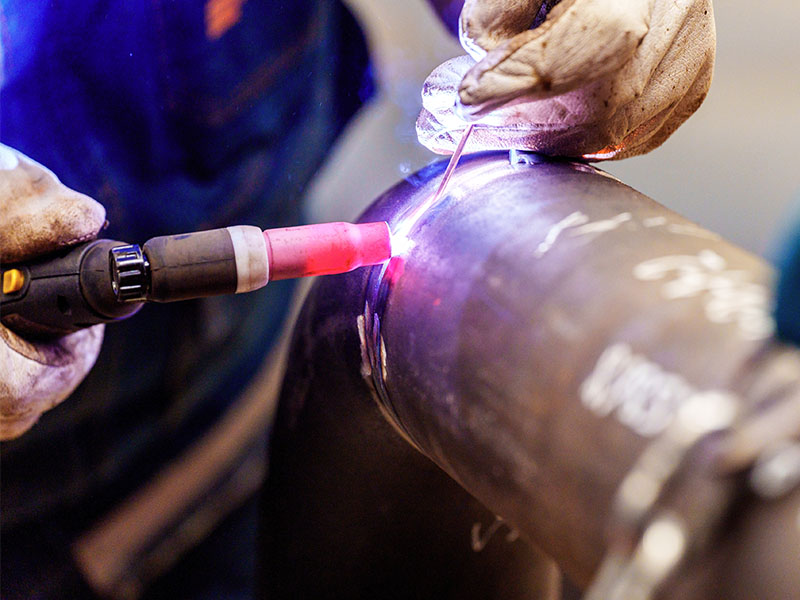
TIG welding, or gas tungsten arc welding, uses a non-consumable tungsten electrode to create the welding arc. Unlike MIG welding, the electrode doesn’t become part of the finished joint. You add filler metal separately with a rod when the project requires it.
This process gives you precise control over heat, filler placement, and weld appearance. Many TIG welders include a foot pedal or fingertip control that lets you adjust amperage while you work. That control is valuable when you’re welding thin material or trying to limit distortion.
TIG welding is commonly used on stainless steel, aluminum, mild steel, copper alloys, and other specialty metals. It’s a strong option for decorative metalwork, visible joints, automotive components, thin tubing, and projects where appearance matters.
However, TIG welding requires more coordination than MIG welding. You’ll need to control the torch with one hand, feed filler rod with the other, and sometimes adjust amperage with your foot. Maintaining the correct arc length also takes practice.
Cleanliness is essential. Oil, rust, paint, oxidation, or dirt can quickly contaminate the tungsten and affect weld quality. Before welding, you’ll need to prepare the material carefully and use tools that haven’t introduced contamination from other metals.
TIG welding is slower than MIG welding, but its precision can reduce grinding and finishing work. When control matters more than speed, that slower pace can be a worthwhile tradeoff.
When TIG Welding Is the Best Choice
TIG welding is usually your best choice when you need clean, precise, and visually appealing welds. It gives you more control over the weld pool than MIG or stick welding, which is especially helpful when working with thin or heat-sensitive material.
Choose TIG Welding When You Need:
- Precise control over heat input
- Clean welds on visible surfaces
- Better control on thin sheet metal
- High-quality results on stainless steel
- Refined welds on aluminum components
You might choose TIG welding for a stainless steel countertop, decorative railing, aluminum panel, custom exhaust component, or visible furniture frame. Because the weld bead can be narrow and smooth, you may need less grinding or polishing after the joint cools.
TIG welding also lets you start and stop the arc with greater precision. That makes it useful for detailed fabrication, small repairs, and joints located near finished surfaces. You can control heat more carefully, reducing the risk of warping delicate material.
The process isn’t always practical for large structural projects. TIG welding has a slower deposition rate, so it takes longer to fill thick joints. If you’re joining heavy steel or completing several feet of weld, MIG or stick welding may be more efficient.
For aluminum, you’ll generally need a TIG welder with AC capability. Steel and stainless steel typically use DC TIG. You’ll also need the correct tungsten, filler rod, shielding gas, torch components, and settings.
How Stick Welding Works
Stick welding, formally called shielded metal arc welding, uses a flux-coated consumable electrode. When you strike an arc, the electrode melts and becomes filler metal while the flux creates protective gas and a slag layer over the weld.
Unlike MIG and TIG welding, stick welding doesn’t normally require an external shielding gas cylinder. That makes the equipment portable and well suited to outdoor work, remote repairs, and changing jobsite conditions.
Stick welding performs well on thick steel, structural components, fences, trailers, farm equipment, and other heavy-duty projects. It can also handle moderately dirty, rusty, or painted surfaces better than gas-shielded processes. Even so, you’ll get a stronger and cleaner weld if you remove as much contamination as possible.
You may find stick welding useful when repairing a steel gate, reinforcing a trailer frame, fixing outdoor equipment, or welding in an area where moving a gas cylinder would be inconvenient. Many stick welders are compact, durable, and relatively affordable.
The process does require practice. You’ll need to strike the arc without sticking the electrode to the workpiece, maintain the correct arc length, and control the electrode angle as it becomes shorter.
Stick welding also creates slag that must be chipped and brushed away between passes. It tends to produce more spatter than TIG welding and isn’t ideal for very thin metal. Still, its portability and outdoor performance make it dependable for demanding repairs.
When Stick Welding Is the Best Choice
Stick welding is often your best choice when you’re working outdoors, welding thick steel, or repairing metal that can’t be cleaned perfectly. The electrode’s flux coating protects the weld pool more effectively in windy conditions than external shielding gas.
Choose Stick Welding When You Need:
- Reliable outdoor welding performance
- A portable setup without shielding gas
- Strong welds on thicker steel
- Better tolerance for rust and mill scale
- Equipment suited to remote repairs
You’ll benefit from stick welding when repairing fences, heavy gates, equipment frames, trailers, or structural components. It’s also useful when your work area is far from a fully equipped shop.
Electrode selection plays a major role in your results. Different electrodes are designed for specific positions, penetration levels, current types, and material conditions. Some provide deep penetration for repair work, while others create smoother beads and are easier for beginners to control.
Stick welding works best on thicker material. If you’re welding thin sheet metal, the concentrated heat can quickly create holes or distortion. MIG or TIG welding will usually give you better control on lighter materials.
You’ll also need to plan for cleanup. After each pass, remove the slag completely before adding another layer. Trapped slag can weaken the joint and create visible defects. A chipping hammer and wire brush should be part of your basic setup.
Choose stick welding when durability, portability, and outdoor reliability matter more than appearance.
MIG vs. TIG vs. Stick Welding for Different Metals
Your base material should strongly influence the welding process you choose. Mild steel is the most flexible because you can weld it with MIG, TIG, or stick equipment. The best method depends on thickness, location, appearance, and project size.
Mild Steel
For thin mild steel, MIG or TIG welding is usually the better option. MIG gives you speed and ease of use, while TIG offers more control over heat. Stick welding can burn through thin material unless you use the correct electrode and have well-developed technique.
Stainless Steel
Stainless steel can also be welded with all three processes. TIG welding is often preferred for visible stainless steel joints because it produces a clean bead and helps limit distortion. MIG welding is faster for larger projects, while stick welding may be useful for thicker material or outdoor repairs.
Aluminum
Aluminum requires additional preparation and specialized equipment. AC TIG welding works well for thin aluminum and projects that need a refined finish. MIG welding can be faster on thicker aluminum, but you may need a spool gun or push-pull system to feed the soft wire reliably.
Cast Iron
Cast iron can be difficult because it may crack during heating and cooling. Stick welding with an appropriate nickel-based electrode is often used for certain repairs, although preheating and controlled cooling may be necessary.
Whatever metal you’re welding, confirm that your filler material, polarity, shielding method, and machine settings are compatible.
Choosing a Welding Process for Your Workspace
Your work environment can eliminate certain welding options before you consider speed or appearance. A protected garage or workshop gives you the most flexibility because you can control wind, moisture, ventilation, and electrical access.
MIG and TIG welding rely on shielding gas, so even a light breeze can affect the weld. An open garage door, portable fan, or outdoor draft may disrupt gas coverage and cause porosity. If you’re using either process, position wind barriers around the work area without restricting safe ventilation.
Stick welding is generally more reliable outdoors because the electrode’s flux coating protects the weld pool. It can handle wind better than gas-shielded welding, making it useful for fences, gates, trailers, and equipment repairs.
Check Your Workspace Before Welding
- Confirm whether your outlet provides 120-volt or 240-volt power.
- Verify that the circuit can support your welder’s electrical requirements.
- Remove flammable materials from the welding area.
- Make sure the workspace has adequate ventilation.
- Protect MIG and TIG welds from drafts.
- Keep cables, clamps, and cylinders organized.
- Avoid welding in rain or around standing water.
A long or undersized extension cord can reduce machine performance and create a safety concern. Always follow the manufacturer’s requirements for cord length, wire size, outlet capacity, and breaker rating.
You should also leave enough room for sparks, hot metal, tools, and personal protective equipment. An organized workspace improves safety and helps you maintain more consistent weld quality.
Comparing Skill Level, Speed, and Weld Appearance
Your experience level can help you decide which process offers the best balance of control and convenience. For many homeowners, MIG welding provides the easiest starting point. The automatic wire feed reduces the number of movements you need to coordinate.
TIG welding has the steepest learning curve. You’ll control the torch, filler rod, weld pool, and sometimes amperage at the same time. Although it takes longer to develop consistent technique, TIG welding gives you excellent control and a refined finished appearance.
Stick welding also requires practice, particularly when striking the arc and maintaining the proper electrode distance. Your early welds may look uneven, but the process becomes highly effective once you learn to keep a stable arc.
How the Three Processes Compare
- Easiest to learn: MIG welding
- Fastest for long welds: MIG welding
- Best for visible welds: TIG welding
- Best for thin metal: TIG or MIG welding
- Best for outdoor repairs: Stick welding
- Best for thick, imperfect steel: Stick welding
Speed varies considerably between methods. MIG welding is generally the fastest because the wire feeds continuously. TIG welding is slower because you’re controlling the filler metal and heat carefully. Stick welding requires electrode changes and slag removal, which can extend the project timeline.
Before choosing, decide whether your priority is easy operation, speed, appearance, portability, or performance in difficult conditions.
How to Choose the Best Welding Process for Your Project
You can narrow your options by evaluating five practical factors. Start with the material itself, then consider where you’ll work and what you expect from the finished weld.
Evaluate These Five Factors
- Base metal: Identify whether you’re welding mild steel, stainless steel, aluminum, cast iron, or another metal.
- Material thickness: Thin metal requires more heat control, while thick steel may need deeper penetration.
- Work location: Decide whether you’ll weld in a protected workshop or outdoors in changing conditions.
- Finished appearance: Determine whether the weld will remain visible or be covered, ground, or painted.
- Frequency of use: Consider whether you need a machine for occasional repairs or regular fabrication work.
For a mild steel garden gate built inside a garage, MIG welding may offer the best combination of speed and ease. For a decorative stainless steel railing with exposed joints, TIG welding can provide a cleaner finish. For a rusty utility trailer repaired outdoors, stick welding may be the most practical option.
Don’t base your decision on the welding machine alone. Your complete setup may include a helmet, gloves, jacket, clamps, cables, filler metal, shielding gas, contact tips, electrodes, nozzles, and preparation tools.
You should also think about future projects. A wider amperage range, dual-voltage capability, or multi-process machine may reduce the need to upgrade later.
Choose the Right Welding Supplies With Confidence
MIG welding offers speed and beginner-friendly operation. TIG welding delivers precision and a clean finish, while stick welding provides dependable performance on thick metal and outdoor repairs. Your best option depends on your material, workspace, experience, and project goals.
C & O Distributors can help you choose compatible welding equipment, consumables, safety gear, and metal fabrication support. We’ll help you build a setup that fits your work instead of selling you equipment you don’t need.
Contact C & O Distributors today to discuss your project and get the supplies you need to weld safely and confidently.
